
Are AI agents replacing jobs? This is one of the biggest questions businesses, employees, and students are asking in 2026. As artificial intelligence becomes smarter and more capable, AI agents are now handling tasks that once required human workers. From customer support and content creation to software development and data analysis, AI-powered systems are changing how work gets done.
But does that mean humans are becoming obsolete?
The reality is more complex. While some roles are being automated, many new opportunities are also emerging. The future of work is not simply about humans versus machines—it is about humans working alongside intelligent systems.
In this guide, we’ll explore the impact of AI agents on employment, examine real-world examples, discuss which jobs are most affected, and answer the question: Are AI agents replacing jobs, or are they creating a new workforce landscape?
What Are AI Agents?
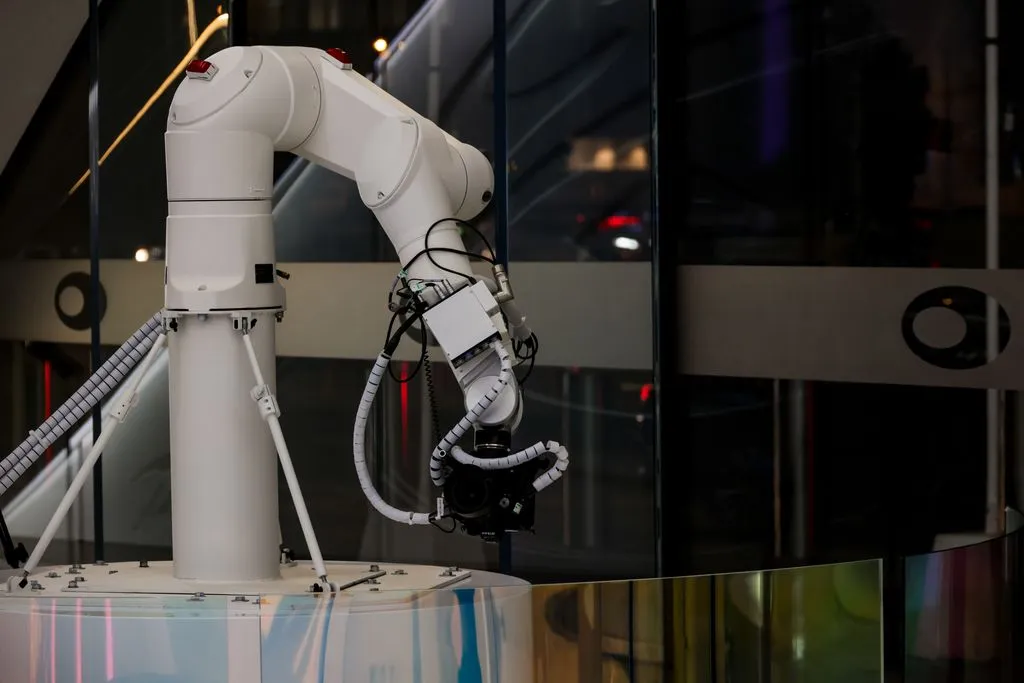
Before discussing job replacement, it’s important to understand what AI agents actually are.
AI agents are intelligent software systems that can perform tasks independently, make decisions, learn from data, and interact with users. Unlike traditional automation tools that follow strict rules, modern AI agents can reason, adapt, and complete complex workflows.
Examples include:
- AI customer service assistants
- Autonomous research agents
- AI coding assistants
- Marketing automation agents
- Virtual executive assistants
- AI sales representatives
Companies are increasingly adopting these tools because they improve efficiency and reduce costs, accelerating the trend of AI agents replacing jobs in administrative sectors.
This trend is driving major conversations about the AI agent’s future of work and how businesses will evolve over the next decade.
Why AI Agents Are Growing So Fast in 2026
Several factors have accelerated AI adoption.
Lower Costs
Businesses can deploy AI agents at a fraction of the cost of hiring additional employees.
Improved Accuracy
Modern AI systems make fewer repetitive mistakes and process large amounts of information quickly.
Increased Productivity
Employees using AI can often complete tasks two to five times faster than before.
Continuous Availability
Unlike human workers, AI agents don’t require breaks, vacations, or sleep.
According to multiple industry reports published between 2024 and 2026, organizations implementing AI-driven workflows have reported significant productivity gains, particularly in administrative and knowledge-based work.
As a result, AI is no longer a future technology—it’s a present-day business necessity that is actively driving discussions around AI agents replacing jobs.
Are AI Agents Replacing Jobs or Transforming Them?
The answer is both.
Some jobs are experiencing genuine displacement, while others are being transformed rather than eliminated.
Historically, technological revolutions have followed a similar pattern.
Consider:
- ATMs changed banking jobs but didn’t eliminate banks.
- E-commerce transformed retail but created logistics jobs.
- Computers replaced many clerical tasks while creating IT careers.
The shift toward AI agents replacing jobs follows this exact pattern. While routine and repetitive work is becoming increasingly automated, human expertise remains irreplaceable in areas that demand:
- Creativity
- Leadership
- Emotional intelligence
- Strategic thinking
- Relationship building
- Complex decision-making
Instead of completely replacing workers, many organizations are redesigning roles around human-AI collaboration.
AI Agent Job Displacement 2026: Which Jobs Are Most Affected?

The topic of AI agent job displacement in 2026 has become a major concern across industries.
The jobs most vulnerable share common characteristics:
1. Data Entry Roles
Tasks involving repetitive information processing can now be automated almost entirely.
2. Basic Customer Support
AI chatbots and virtual assistants now resolve a large percentage of customer inquiries without human intervention.
3. Administrative Assistants
Scheduling meetings, organizing emails, generating reports, and managing documents are increasingly handled by AI agents.
4. Basic Content Production
Simple articles, product descriptions, and social media posts can often be generated using AI tools.
5. Entry-Level Research Tasks
AI can quickly gather information, summarize documents, and create reports.
While these positions may decline, higher-level versions of the same jobs often become more valuable.
Industries Experiencing the Biggest AI Impact
Not every industry is affected equally.
Technology
Software companies are heavily integrating AI agents into development, testing, and operations.
Finance
Banks and investment firms use AI for fraud detection, risk analysis, and customer service.
Healthcare
AI assists doctors with diagnosis support, scheduling, and medical documentation.
Marketing
Campaign management, content creation, and customer segmentation increasingly rely on AI.
Human Resources
Recruitment screening and candidate matching are becoming more automated.
These industries represent the front lines of AI agents replacing jobs as the modern workplace landscape rapidly evolves.
Will AI Agents Replace Software Engineers?

One of the most searched questions today is: Will AI agents replace software engineers?
The short answer is no, but the role is changing significantly.
AI coding assistants can now:
- Generate code
- Fix bugs
- Write documentation
- Perform testing
- Suggest optimizations
This has led some people to believe software engineering careers are at risk.
However, experienced engineers still provide critical skills:
System Architecture
AI can generate code, but designing large-scale systems remains a human-driven task.
Problem Solving
Businesses face unique challenges requiring creativity and judgment.
Security and Compliance
AI-generated code still requires human review for safety and reliability.
Product Strategy
Understanding customer needs and translating them into software solutions remains a human responsibility.
The future will likely involve engineers supervising AI systems rather than writing every line of code manually.
So, when asking, Will AI agents replace software engineers, a more accurate question is: “How will software engineers work alongside AI?”
The Rise of AI-Augmented Workers
A growing trend in 2026 is the emergence of AI-augmented professionals.
These workers use AI as a powerful assistant rather than viewing it as competition.
Examples include:
Marketers
Using AI for campaign analysis and content generation.
Lawyers
Using AI to review contracts and legal documents.
Accountants
Using AI for bookkeeping and financial forecasting.
Designers
Using AI-generated concepts as starting points for creative work.
Studies consistently show that workers who effectively leverage AI often outperform those who don’t.
The biggest threat may not be AI itself—but failing to learn how to work with it.
Best AI Tools for Productivity in 2026
Many professionals are already using advanced AI tools for productivity in 2026 to stay competitive.
Popular categories include:
Writing Assistants
- Content creation
- Email drafting
- Report generation
Coding Assistants
- Code generation
- Debugging
- Documentation
Meeting Assistants
- Automatic transcription
- Summaries
- Action item tracking
Research Agents
- Data collection
- Market analysis
- Competitive intelligence
Workflow Automation Platforms
- Task management
- Process automation
- Team collaboration
Businesses that adopt these tools strategically often gain significant productivity advantages.
Must-Have Hardware for AI Power Users (2026)
To run advanced AI agents and automate your workflow smoothly, relying only on software isn’t enough. Upgrading your physical workspace with AI-ready hardware can significantly boost your daily efficiency and keep you ahead of the curve.
Here are the top tools that professionals are using this year to maximize their productivity:
- AI-Powered Noise-Canceling Headphones: To focus deeply while managing your AI automation tasks, premium headphones like the Sony WH-1000XM5 or Bose QuietComfort Ultra are excellent choices for blocking out workplace distractions and ensuring crystal-clear communication.
- AI-Ready Smart Webcams: If you attend frequent virtual meetings or coordinate with remote teams, smart webcams with automated AI tracking and intelligent lighting adjustments (such as the Anker PowerConf series) ensure you always look professional.
- Next-Gen Laptops with Dedicated NPUs: Running local AI models and multiple background workflows requires serious processing power. Upgrading to a laptop featuring dedicated AI chips, like the Apple MacBook Pro (M-Series) or the latest Intel Core Ultra devices, is essential to future-proof your tech setup.
Disclaimer: As an Amazon Associate, I earn from qualifying purchases.
New Jobs Being Created by AI
While headlines often focus on job losses, AI is also creating entirely new career paths.
Examples include:
- AI Prompt Engineers
- AI Operations Managers
- AI Ethics Specialists
- Human-AI Interaction Designers
- AI Compliance Officers
- Machine Learning Trainers
- AI Product Managers
Many of these roles barely existed a few years ago.
History suggests that technological innovation frequently creates new opportunities that are difficult to predict in advance.
How Workers Can Stay Relevant in the AI Era
The most successful professionals in 2026 share one common trait: adaptability.
Here are practical strategies for staying competitive.
Learn AI Fundamentals
Understand how AI systems work and where they are most effective.
Develop Human-Centered Skills
Focus on:
- Communication
- Leadership
- Creativity
- Negotiation
- Emotional intelligence
Become an AI Power User
Learn how to use AI tools effectively within your profession.
Continue Learning
Technology evolves rapidly, making continuous education essential.
Build Strategic Thinking Skills
Even with AI agents replacing jobs, organizations still heavily rely on people who can make decisions, solve problems, and lead teams.
Workers who combine human expertise with AI capabilities will likely remain highly valuable.
What Does the Future of Work Look Like Beyond 2026?
The future of work will likely involve greater collaboration between humans and intelligent systems.
Rather than replacing entire professions overnight, AI agents are expected to automate specific tasks within jobs.
This means:
- Higher productivity
- Faster workflows
- More focus on creative work
- Increased demand for specialized skills
- Continuous workforce reskilling
Companies that successfully blend human talent with AI capabilities will have a significant competitive advantage.
The workforce of the future will not be fully human or fully automated—it will be hybrid.
Frequently Asked Questions (FAQ)
Are AI agents replacing jobs in 2026?
Yes, some jobs involving repetitive and predictable tasks are being automated. However, many jobs are also evolving rather than disappearing entirely.
What jobs are most at risk from AI agents?
Data entry, basic customer support, administrative work, and routine content creation roles face the highest automation risk.
Will AI agents replace software engineers?
No. AI is changing software development workflows, but engineers remain essential for architecture, strategy, security, and complex problem-solving.
What are the best AI tools for productivity in 2026?
Popular categories include writing assistants, coding assistants, research agents, meeting assistants, and workflow automation platforms.
What skills are most valuable in the AI future of work?
Creativity, leadership, emotional intelligence, communication, strategic thinking, and AI literacy are becoming increasingly important.
Is AI creating new jobs?
Yes. AI is generating demand for roles such as AI product managers, AI ethics specialists, prompt engineers, and human-AI interaction designers.
Conclusion
So, are AI agents replacing jobs? The answer is yes in some cases—but that’s only part of the story.
AI agents are undoubtedly automating routine tasks and reshaping many industries. However, they are also creating new opportunities, increasing productivity, and transforming how professionals work.
The biggest winners in 2026 are not necessarily those competing against AI, but those learning how to work alongside it. As the AI agents’ future of work continues to evolve, adaptability, lifelong learning, and human-centered skills will become the keys to long-term career success.


